Bumble is ditching the swipe (and its women-first model)
Hey, remember when dating apps simply sold users the promise of “If you keep swiping, you’ll find love?” As we all know, the act of swiping became the industry’s selling point. And not only did it revolutionize modern dating as we know it, but it may have become addictive, too,
The reign of the swipe may be over, though.
A recent Forbes Health survey found the average dating app user spends nearly 51 minutes a day on dating apps, meaning that many of your dating app users are spending close to an hour searching for connections. Every. Single. Day. And yes, all of that time is spent, you guessed it, swiping away.
What does a dating industry look like in a post-swipe era? What else could possibly be out there?
But now, one of the companies that truly put swiping on the map, aside from the age-old Tinder, is Bumble, which has recently announced that it’s slowly ditching the swipe model — and potentially shifting away from their women-message-first identity — for good.
But what does a dating industry look like in a post-swipe era? What else could possibly be out there? In my opinion, a whole lot more.
Dating app users are burned out
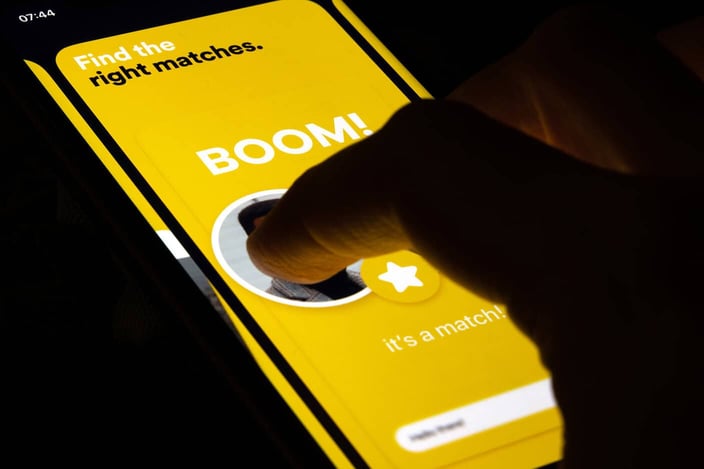
We all know it by now; I’ve even written about it again and again. Dating app users are truly burnt out. They’re tired of endless scrolling, swiping, matching only to never get a response, or feeling like dating apps have become a way to get followers on other social media accounts.
Personally, if I see another dating app bio that says, “I don’t come on here much but find me @…” I’ll scream.
“It’s [Bumble’s pivot] a direct response to burnout.” Adam Cohen-Aslatei, the CEO of Three Day Rule, a modern matchmaking company, tells Dating News, “People are tired of endless swiping with no real outcome, and they’re starting to question whether the volume is actually helping them find a relationship.”
And as someone who has written about dating culture for the past decade, I’ve seen folks go from “How do I get more matches?” to “How do I stop feeling exhausted about dating?” So, yeah, the problem is very real.
Swipe culture might not be dead; but it isn’t enough
Listen, some folks may have always liked, and still like, the nature of swiping. Picking up your phone and swiping to your heart’s desire can feel fast, exciting, and super low-pressure.
But I think for folks who aren’t looking for a good ol’ one-night stand, and are focused on finding ‘the one’ (or if you’re non-monogamous like me, ‘the ones’), then swiping can definitely feel exhausting after a while if it doesn’t lead anywhere. Folks want actual connection.
“Swiping isn’t dead, but it’s no longer enough. Users crave more curation and intention,” Cohen says, “They want to spend less time searching and more time connecting with people, not just profiles.”
That’s why we’re seeing a huge rise in anti-swipe ways of meeting folks, like AI matchmakers, curated recommendations from real matchmakers, events or community-based dating or slower dating experiences.
Bumble might lose the ‘thing’ that made it different
Remember the launch of Bumble? I remember it like it was yesterday and it felt revolutionary to the dating world (and women everywhere!)
Why? Well, it was the only women-message-first dating app, the branding felt super sleek and fun and empowerment-heavy and it seemed to make every woman I met feel better about dating app gender dynamics. Goodbye, d*ck pic! Hello, respect and boundaries!
“That identity is what made Bumble distinct and gave women a sense of control,” Cohen explains.
But now, in its announcement about removing the swipe, and potentially their gender specific features, Bumble may lose the ‘thing’ that made it different in their heyday. If Bumble moves too far away from it, according to Cohen, it risks losing its largest differentiator from other apps.
Ditching the swipe, in my opinion, is great news. Ditching the women-centered model? Not so much.
The business model is changing, too
So yeah, the swipe is evolving. Historically, apps have monetized through boosts, likes, more swiping, and of course, premium features like the sending of a rose or ping.
But if users swipe less, engagement changes, right? What happens then?
“Focusing on outcomes, not activity,” Cohen says, “People are increasingly willing to pay for better matches, guidance, and a more efficient experience that respects their time.”
Rather than swiping, the business model of the dating app will likely shift to be real or AI matchmaking, coaching, or paying for premium curation.
I personally love the idea of this.
Predicting the dating industry’s next era
If I had a magic crystal ball and could predict the dating industry’s next era, I’d say that it’s not just tech, but a human element that makes it feel less impersonal. Dating can get back to feeling, oh, say, actually real!
Bumble’s pivot may just be the very thing that reveals the truth to the rest of the industry.
“I also imagine a hybrid of tech and human insight,” Cohen adds, “Like less browsing, and fewer, but better options. We’re already seeing a shift toward more curated matches with context, feedback, and even coaching layered in.”
All of this hits on the point that I think (I pray to God, eventually) all dating apps see: More isn’t better anymore. People are tired, and they don’t need more potential connections, just better and more compatible ones.
For years, Bumble, and other dating apps, have competed for the more factor: more profiles, more matches, more engagement, and the list goes on. But Bumble’s pivot may just be the very thing that reveals the truth to the rest of the industry.
Goodbye swiping, hello the future of dating.