We’ve never seen non-monogamy in the headlines as much as we have over the last few years — and it’s never been so hotly debated as a result.
There’s Lily Allen and David Harbour’s high-profile (and high drama) split; Ava’s stint in a throuple in Hacks; and the show Industry’s portrayal of unethical people navigating an open marriage.
Now, Olivia Wilde’s upcoming film “The Invite” joins this ever-growing list — and just may be the nuanced, positive portrayal the community has been waiting for.
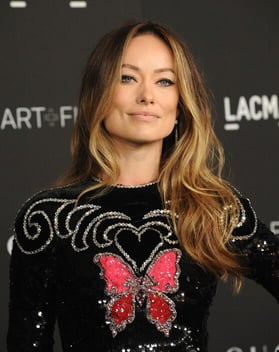
Luckily for us, Victoria Joseph got an exclusive invitation to the film’s premiere. Joseph is herself a participant in an ENM relationship with her husband Ryan. Together they co-founded a matchmaking company which specializes in ENM relationships.
Her expertise in ethical non-monogamy means she’s uniquely positioned to answer our most burning questions about the film, such as: Does a film with stars as high-profile as Olivia Wilde, Seth Rogen, Penelope Cruz, and Edward Norton tackle the topic of ENM with sensitivity? As a comedy, does the film cross any ethical lines, or does it provide much-needed representation?
Joseph answers all this and more in our interview — movie details ahead!
DN: Did the film feel authentic to the realities of ENM relationships, or did it lean more into dramatization? Were there any moments that made you think, “Finally, a movie got this right”?
VJ: I was curious to see how non-monogamy would be portrayed in this movie. When I first received the email invite, the movie was described to me (direct quote) as “a riotous film about love, desire, monogamy, polyamory, and so much more.”
Polyamory is often used incorrectly, because it is such a buzzword, most people do not understand the nuances of the different non-monogamous relationship dynamics.
After I received this email and looked into the description of the movie more, this movie was showcasing a couple who is more in the swinging lifestyle, and not polyamorous. Which made me more excited to see this movie!
I was curious to see if it would feel authentic, if it would feel fake, if it felt like dramatization.
But honestly, it really did reflect a good ethically non-monogamous relationship. [One of] the moments during the movie that made me think, wow, they got this right…was when this couple named Pina and Hawk (Penelope Cruz and Edward Norton) were describing to Joe and Angela (Seth Rogen and Olivia Wilde) [the concept of] compersion, meaning that you get joy and happiness seeing your partner giving joy and pleasure to other people. [And] they were describing how consent was important, and how it starts.
I feel like my husband Ryan and I [have] had similar conversations with people who never even thought to talk about non-monogamy. [The film] really articulates it in a way that was really positive and really, really funny.
DN: On the flip side, were there any portrayals or misconceptions in the film that concerned you?
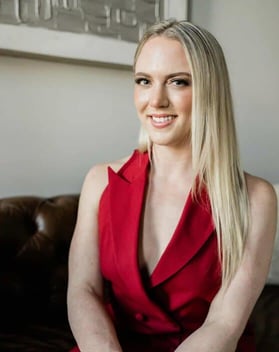
VJ: I guess from my own personal experience, my advice to Pina and Hawk is, you know, don’t surprise people with a night of swinging.
Angela and Joe were both really enthusiastically interested in moving forward with them. And I think the concern for me in that particular moment was, in a real world environment, there wasn’t an opportunity for them to really sit with the idea of opening their relationship or having experiences with other people.
Pina and Hawk definitely just surprised them out of nowhere with this potential experience that they were going to offer them. So while they were excited and wanted to do it, they should have had the conversation ahead of time.
[Joe and Angela] didn’t get a chance to talk, and their marriage was a little rocky to begin with. Usually what I share with those who do want to open the relationship is that it’s not good for couples who have issues.
It’s better for couples who are really strong and really solid, because [sometimes] opening up your relationship expedites what needs to happen: sometimes it will end relationships, sometimes it’ll make relationships closer. It just depends.
[Another concerning detail]: Pina and Hawk share their story about how they got together and how they started…which (without revealing any details) was clearly a little bit risque.
DN: After seeing the movie, what larger cultural conversation do you hope audiences have about relationships, intimacy, and consent?
VJ: I hope people do talk about open relationships more after seeing this movie, and seeing if it could be for them. I think it’s an area that is so taboo. I’m all about trying to normalize non-monogamy, and this film really shows it being normalized. It shows it in a positive and healthy light.
Of course, relationships aren’t perfect, and there are moments in the movie where there are little tidbits of little tiffs going on with both couples. But I just hope that it opens conversations for people. I hope that it lets people know that there’s more than just one relationship dynamic. You don’t have to be monogamous forever.
You can have a conversation, and you can open your relationship, and you’ll see that if the relationship is strong and you guys know each other as each other’s soulmates, it’ll just bring you closer. It opens up communication, which is [often a skill] everyone really struggles with.
To me, intimacy is how vulnerable you can be with someone. Vulnerability is intimacy, which might be surprising because people might think that kissing is the most intimate thing you can do, or having sex is the most intimate thing you can do.
But when you’re active in an open relationship like this with your lifestyle, you’ll learn that being vulnerable and sharing your emotions, that is what real intimacy is.
So this movie was really good about consent — having the conversation, talking about it, seeing if there’s any boundaries that they need to discuss or talk through, and where to do it or how to do it.
And so being specific when it comes to consent is so important, and ultimately will make the sexual experiences better — When there is conversation around consent and what’s OK and what’s not OK, what’s within the limits, what’s off limits … ultimately will make the sexual experiences better.
So in this movie, they do have a really good back and forth conversation about consent. They really did break down all [of these topics] as best as they could with the time and moments that they had.
DN: What did you think the film was ultimately trying to say about modern relationships?
VJ: I think that it was trying to say that modern relationships, the way that Pina and Hawk have it, is an option. It can be someone’s reality and it can be a beautiful, beautiful thing. People live [ENM lifestyles] and they do it successfully.
DN: What role do you think media representation plays in shaping public attitudes toward ethical non-monogamy?
VJ: The representation that the media presents to the public is huge, because the media goes to the masses…So when stuff like ethical non-monogamy is positively represented, I think it has a positive effect on people who don’t even know about it or know that people are living it.
Ultimately, I think the more positive representation there is about ethically non-monogamous relationships, the more it can be normalized, right?
[ENM] slowly but surely can be normalized, and the help of the media is crucial, because if it was consistently really negative, then everyone who thinks about non-monogamous relationships will just have a negative connection to it because that’s the information that they’re being fed.
So when [audiences are in] a movie theater or watching a scene where things are going well and [ENM is] positively represented, I think it changes their brain chemistry a little bit. Maybe there’s curiosity, maybe there’s interest, self-reflection.
So I think the more we see it, the more it’s normalized, [the more] people who are living non-monogamous relationship lifestyles can maybe do so publicly or freely because it is normal. It’s more common than people think.
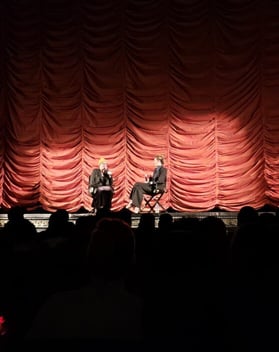
DN: Have you noticed Hollywood becoming more open to nuanced portrayals of alternative relationship structures in recent years?
VJ: Yes! The movie that comes to mind when it comes to alternative relationship structures is Fifty Shades of Grey, which has Dakota Johnson in it. She’s also played in a movie called Splitsville, which is about non-monogamy as well, and on top of that, she’s done a matchmaker movie called Materialists.
So she’s been part of a Fifty Shades of Grey kinky movie, a non-monogamous film [Splitsville], and The Materialists as a matchmaker film. [She’s] someone who has been a part of multiple movies that have been very popular [and] that everyone knows about. Hollywood is just accepting that more and more, I believe.
Another positive representation of some alternative relationship structures would be Bridgerton, with Benedict Bridgerton, for example. He was portrayed as bisexual, in a throuple but also did group play … [Bridgerton] depicted that this happened a long time ago, and non-monogamy has been around for centuries.
So, yes, I believe Hollywood is becoming more open.
DN: What advice would you give viewers who watch this film and start questioning whether traditional relationship models are right for them?
VJ: Do your research, deep dive, [and] learn more about the different relationship structures that are out there. What I recommend for other people is, you know, you hear some words, you hear some terminology, look into it and then go down rabbit holes. Educate yourself on all the possibilities that are out there.
Find the sites, find the threads, listen to the podcast, read the stories, really just learn about the terminology and figure out what resonates with you.
Ultimately, my biggest piece of advice would to be to gather a bunch of terminology, write it down, and…create a ‘yes, no, or maybe’ activity that you can do with yourself or you can do with a partner. Choose yes, no, or maybe on things that are interesting to you and things that are hard no.
And there are things you can do on this particular list with a monogamous partner. Try everything once — maybe twice -– or if you have a partner, compare notes, and move forward accordingly.
Just enter this particular space with an open mind and no judgment and with intention. Meet people who are living this particular lifestyle or have this kind of relationship dynamic, and learn. I’ve always done that. I hear people’s advice and I listen.
I recommend doing more of that. Go to social events that are low pressure, where nothing really has to happen. You can just network, and you can just talk and then go to spaces without the pressure of having to do things with other people.
That is definitely not something that is required, but … the more you dive into this, the more communication opens.
Having a coach, having a therapist, having support will make all the difference when it comes to questioning if a traditional relationship model is right for them or not.
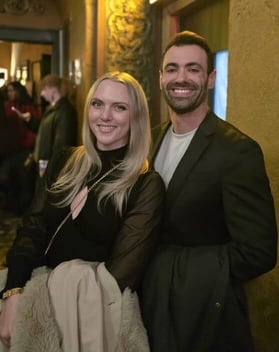
DN: You were invited to the A24 premiere of “The Invite.” What has the experience been like preparing for a Hollywood film premiere connected to themes you actively speak about?
I was over the moon. Just the fact that a movie was created with non-monogamous ties to it just made me incredibly happy, because part of my life’s mission is to normalize non-monogamy.
A24 [has] made some of the most iconic movies of all time. To see a premiere before it could even hit the theaters … and they’re interested in my thoughts, and my opinions, and my votes. I was incredibly happy.
This was the first time I ever dressed up to go to a movie. I really felt like I wanted to be a positive representation [of a non-monogamous relationship lifestyle] because oftentimes, non-monogamy [and] swinging lifestyles can really be seen as dated or seedy. People don’t realize that people in non-monogamous relationships could be anybody.
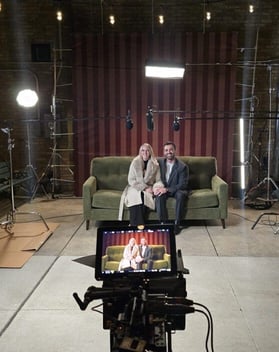
I definitely gave myself the opportunity to speak on it. There was a testimonial at the end of the movie, and myself and my husband Ryan and my sister … got to do a testimonial on the movie, and that was when the movie was really fresh in my mind.
I was so excited to really give them my thoughts, and it was really great. I hope to see more representation about non-monogamous relationships in the future, and I just really hope this movie does well, because it deserves to do well.