
Not to toot my own horn, but I consider myself somewhat of an online dating connoisseur. As a sex and relationships journalist who has been on dating apps for over 10 years, I know a thing or two about meeting people online.
This made the prospect of testing Zoosk all the more intriguing to me.
Zoosk is a dating website and app that I’d heard of for years, but never actually tried. I’ve largely stuck to the major trifecta of Tinder, Bumble, and Hinge, with rare moments of branching out.
I knew Zoosk was popular internationally, so I was curious to see what it was all about.
At first visit, the website seemed user-friendly and pretty simple to navigate. Testing the platform as a free and paid member, I was interested to see how the member base would compare to the more popular apps in my area, whether the features measured up, and what the matching process would be like.
Signing Up in 5 Steps
The signup process for Zoosk was similar to that of most other dating apps. I started using the mobile app. When I reached the signup page, I saw options to create my account using Facebook, Apple, Gmail, or another email address.
This step wasn’t optional, so that’s something I kept in mind when thinking about privacy. Some users may not want to connect their social profiles or share certain information with the app, so it’s good that Zoosk provides multiple options to go by.
Step 1: The Basics
Soon enough I was inputting the basic information that will help build my profile. One thing I noticed immediately when I reached the second page was there are only two options for gender identity: man and woman.
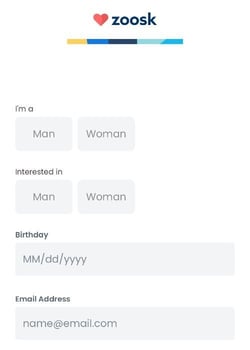
This applies to both how the user identifies and the gender of the person they’re looking for. I didn’t particularly love that aspect, especially as a bisexual woman and an ally to gender non-conforming and trans folks.
In this way, Zoosk doesn’t come across as inclusive as other popular dating apps like Tinder and Bumble.
My full birthdate, email address, and a password were all required to continue building my account.
While including a birthdate is a common online dating requirement — both to show your age and to confirm your identity — it wasn’t verified in any way on Zoosk, so users can essentially fib here without consequence.
Step 2: Add a Photo
The next steps are pretty standard and simple, including adding my first name and at least one photo.
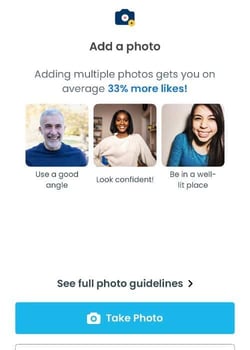
It didn’t appear that adding a photo was a skippable step. The app provided photo guidelines and tips for uploading the best possible pic.
I could either upload a photo from my phone’s library or take a selfie with my camera at that moment, which is a nice option that I don’t always see on other platforms.
It’s also important to note that adding multiple photos is a good idea to optimize your profile, especially if you want more matches.
Having only one photo can make your profile appear sparse or fake. This is true for all the apps.
Step 3: Extra Demographics
The onboarding then goes into some of the characteristics needed to build an actual profile. The app asks about children, and there are only three options: “no,” “yes, and they live with me,” or “yes, but they don’t live with me.” I thought this was an interesting way to approach the topic, and quite limited.
I appreciate that other dating sites allow you to say that you want kids, that you aren’t sure, or that you don’t want children, especially as someone who is very adamantly child-free and wants to stay that way.
The next question asks about education level, giving the typical options. Again, these initial questions didn’t appear to be eligible to skip, so at least each user will have to have some basic information on their profile to kick things off.
Step 4: Filling Out Prompts (Optional)
Next, I was asked about my ethnicity, for which there was a decent list and one last option for “other”, which is on par with most other apps.
I found the following question really interesting, because it required my height — a sometimes controversial aspect of dating profiles that many people have strong opinions about.
I think it’s probably a good idea to include, especially because some daters have a strong preference for how tall their potential partner is, but this may deter other users from wanting to continue building a profile on Zoosk.
The final two questions were about religion and smoking, which I also thought were interesting to require of everyone signing up. There was a decent list of religion/spirituality options, but that can be a very personal topic to some, so not everyone will appreciate that they have to pick one.
On many other apps, the smoking part is often broken into tobacco and cannabis usage separately, but it seems Zoosk only asks for tobacco use during this step.
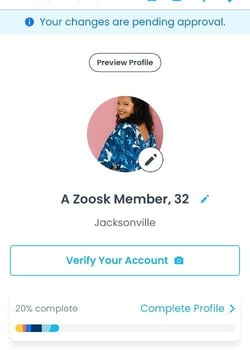
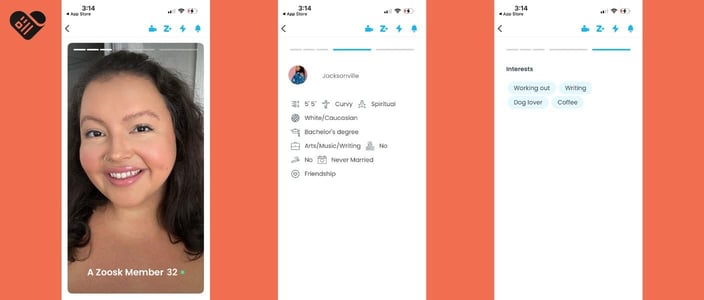
Once I finished these steps, I was taken to an interim profile page. I noticed right away that there was an approval process. My profile name defaulted to “A Zoosk Member,” and there was a banner at the top signaling that my profile changes had to be reviewed before going live.
I could choose to verify my account instantly using my phone’s camera app, which is a nice touch to ensure that each user is who they appear to be.
The questions in the onboarding process only comprised 20% of my profile. I decided to fill out more details to better the quality of my matches and overall experience on Zoosk.
As I expected, the optional details include things like Zodiac sign, relationship history (i.e. divorced, never married, etc), the industry I work in, what kind of relationship I’m looking for, and body type.
Step 5: Adding Interest Tags (Optional)
One interesting feature was, rather than writing out a customized bio paragraph, I can choose up to 10 interest badges to display in my About Me section and answer up to four icebreaker questions. These questions are similar to other profile prompts popularly used on platforms like Hinge and Bumble. They are optional (but useful).
I can imagine that a bare profile wouldn’t really attract many swipes because these prompts are the only real way to express personality traits beyond the basic info.
Even with multiple photos and options chosen for every single profile section, my profile still said it was only 90% complete, so I liked that it really encourages users to create a well-rounded profile.
Browsing for Free
When I first joined and hit the profile page, I saw ads on the page, both on the desktop and mobile app version of Zoosk. Although the other major dating apps also include ads, they don’t pop up as banners like they do on Zoosk, and instead are more subtly woven in.
This is something I personally would like to see changed about the free version.
When browsing through profiles, the format looks similar to the current standard for online dating sites. I can swipe through the photos and profiles that look like cards. One interesting element was that the Zoosk Carousel offers three swiping choices: yes, no, or maybe.
I could swipe right to like someone, left to reject them, or up to say maybe and move on without making a choice.
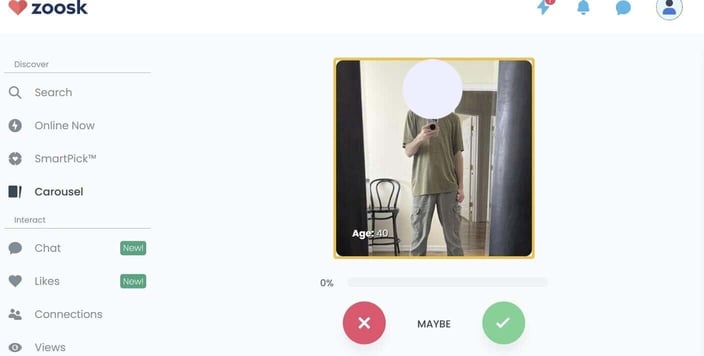
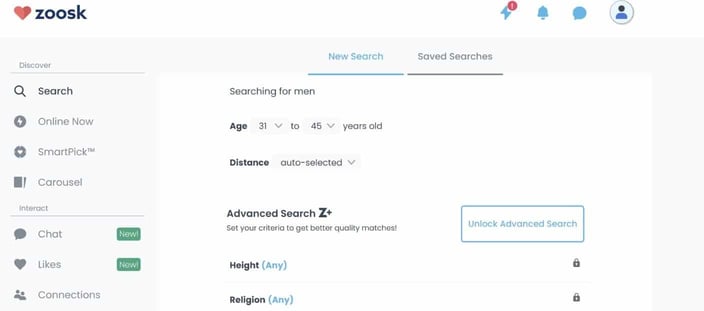
By using the filter button, I can specify the age and distance of potential matches, but that is, unfortunately, the extent of the preferences available without paying.
Things like height, religion, children, body type, and smoking habits are only options for paid members. This definitely means free members must swipe through a lot of mismatched profiles without a way to meaningfully narrow things down.
I found it unique that I can filter profiles by who is Online Now with the free version, which can be useful for a variety of reasons. It’s more productive to match with people who are actively using the app. This lessens the chances of swiping on someone who barely logs in.
Another really different feature is the Live section. Users can start a livestream video that is publicly available, or they can view a livestream by popular or nearby users. There are filters for trending and nearby users who are currently Live. This feature is only available on the app.
Before you get excited imagining Zooskers in compromising circumstances, let me assure you that this feature is generally not sexually motivated. I saw many livestreamers casually holding up the phone and chatting about their day, sometimes in Spanish or Spanglish. Some had more of a pro setup and must earn a lot of gifts (paid for by Zoosk Coins) from the livestream.
While this differentiates Zoosk from a lot of sites, I imagine it wouldn’t always be a favorable experience because the live comment feature doesn’t seem to be actively moderated (from what I could tell, at least). I’m sure some viewers probably say unsavory things. As with any social media space, trolls are unavoidable.
As far as user engagement goes, I could leave comments on videos and send likes to profiles, but I had to subscribe to the paid version to chat.
One of the most important features of any dating app is the ability to send messages, but Zoosk doesn’t allow messaging on the free version. This will probably disappoint a lot of new members, especially because the app doesn’t let you know about the limitation until after you get through the onboarding process.
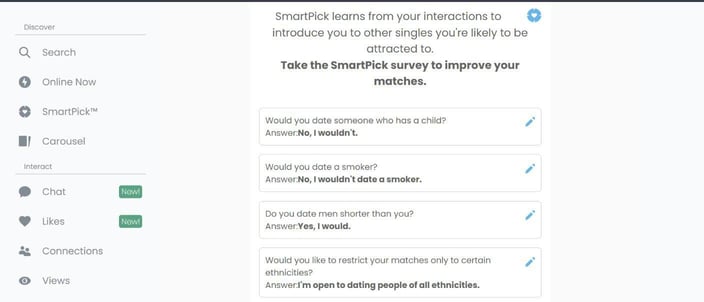
Zoosk’s daily SmartPick feature is cool. It uses my profile information to show me profiles that best fit my preferences and seem most compatible.
Other apps tend to gatekeep this suggestion or make you pay for more than one per week, so it’s a nice touch to include this in the free membership.
My profile got 19 likes during my month-long experiment on the platform. I couldn’t see who liked me as a free member, but as a paid member I could go in and send likes or messages to people who’d already given me a thumbs up.
Having to pay to see profile likes is pretty standard for online dating, but Zoosk does offer one freebie that most apps don’t: Seeing who viewed my profile. That’s a useful feature to have on the free version because I know that person is active and interested enough in me to click to my profile page.
Quality Assessment of Profiles I Saw
When I started swiping through the available profiles on Zoosk, I immediately noticed that I didn’t recognize many of the users, if at all.
This was a bit of a surprise, because after 10+ years on the dating apps in my city, I would have expected to see at least a few familiar faces on this app.
If you’re looking to widen your dating pool beyond what you find on larger platforms, this could be a plus.
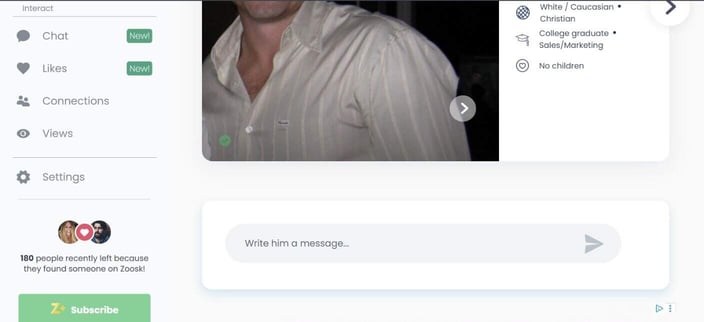
Zoosk doesn’t require filling out all the available profile and personality information, and that became evident while I was sifting through the deck of users.
It seemed that most of them only filled out the required basics during the account creation process (like ethnicity, height, children, religion) and didn’t really put effort into the About Me section or icebreaker questions.
A lot of users didn’t put specifics about their relationship history or what they were looking for, which — personally — is a turn-off for me. It makes their profile seem lower quality and low-effort. For casual daters, this may not matter.
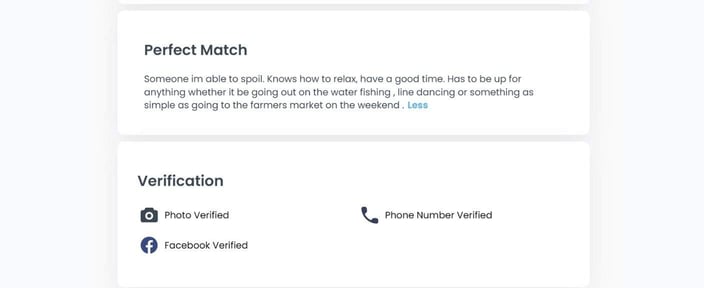
On average, I did notice that the majority of users included more than one photo (always appreciated online). Zoosk profiles also show the ways each user verified their identity (if they did), so that’s great in terms of safety and user trust.
Upgrading to a Paid Account
After checking out all the available features for the free version of Zoosk, I can safely assume that most people will choose to upgrade to a paid subscription if they want to stay on the app, especially if they make a match and want to exchange messages.
From what I could see, the Zoosk pricing options are:
All plans require payment upfront for the subscription term and renew automatically.
Paying will get you unlimited messaging, unlimited filters, more SmartPicks, and remove ads from the site and app.
While these perks sound great in comparison to the limitations of the free membership, I will say that other dating apps offer chatting, several filters, and even smart matches for free. The real choice is whether Zoosk’s dating pool is worth the price you’d normally not have to pay elsewhere.
I have an iPhone, so the signup for a paid subscription followed the usual process — choose the desired monthly option and use my Apple account to connect my wallet for autopay.
If you really want to give the app a go, the three-month plan seems like a better value than the one-month plan because you’ll get a much longer time period to really form an opinion. And for less than half the monthly cost of just one month.
When I tried the paid subscription, I did appreciate both the ad-free experience and the unlimited nature of the features. Being able to see everyone who viewed and liked my profile made browsing easier because I could pinpoint matches who I already knew were interested.
I also liked that I had access to more SmartPicks, so the algorithm took some of the work out of it for me.
Being able to access all the filters while browsing on the paid version was really nice, especially being new to the Zoosk user base. I didn’t really bother with filters for religion or ethnicity, but selecting for “no kids” was important to me.
I discovered that saving my filters was a handy tool that let me customize my swipe options. I saw a good number of profiles that met my preferences, but of course, the more filters I used, the smaller the pool of potential dates.
Safety Features
The verification process was a major plus, in my opinion. While it may seem overkill for some, having my new account and profile under review made it feel like the app was actually being moderated.
Clearly, Zoosk is a platform that cares about the quality and accuracy of the information users provide.
Like I mentioned before, another good safety feature was the small icons on the profile indicating each verification form completed. When I saw those icons, I felt more at ease knowing someone wanted to be honest about who they are (or how they look, thanks to photo verification).
While I do worry about how well the livestreams are actually moderated or filtered, the app had an automatic message in the comments section warning not to write lewd or inappropriate comments. I didn’t see any bad comments. I’d hope that means the algorithm is good at detecting and blocking the trolls.
While I was browsing, I noticed an option to report individual profiles based on things like hate speech, if they’re under 18, inappropriate photos, or fake members. That gives me peace of mind that the Zoosk community can essentially police itself.
Pros & Cons of Zoosk
Zoosk profiles have a lot of capacity for depth and personal disclosure, but most of the guys I saw were keeping it to the bare minimum. Depending on what you’re looking for, the fact that a bio or written prompt is not required could be a negative.
For me personally, I rarely ever swipe right to match with users who don’t write anything in their bio, and I like to put real effort into my own, so I wish that had been available on Zoosk.
Pros
- Live video features that aren’t on typical dating apps.
- Quick signup with plenty of room to personalize.
- Robust verification options.
- A good variety of matching features.
Cons
- Only offers binary gender options.
- Free version is limiting in terms of communication.
- The profiles I saw didn’t have many details filled in.
And another con that bothered me: Zoosk could stand to become much more inclusive.
Seeing that “man” and “woman” were the only options for gender identity and sexual orientation was a major turn-off for me. Even if I weren’t a member of the LGBTQ+ community, I’m sure that I would still feel annoyed that the app doesn’t make space for any other identities.
Who It Helps
One of the biggest things I noticed about Zoosk was that the user base seemed to skew older. I found the average age to be in the mid-30s to late-40s.
I purposely kept my filters open to get a better view of these trends, and I was disappointed to see there weren’t many users within 10 miles of my location.
Because of this, and the features available on the paid subscription, I’d say that Zoosk is a good mature alternative to apps like Tinder and Bumble that attract a lot of young singles.
I’d think Zoosk users would be more likely to want a serious relationship or life partner, and the paid subscription would make sense for that. Investing money into the subscription could pay off, especially if you’re intentional about how you swipe.
I also think someone who is new to online dating and nervous about the safety of the experience would like that Zoosk goes out of its way to moderate and verify each profile. From my experience, Tinder and Bumble are now full of a shocking amount of spam and bot accounts, so not having to deal with that much at all on Zoosk was a major plus.
If someone is looking for a quick hookup or a completely free dating experience, I wouldn’t recommend Zoosk — mainly because they wouldn’t be able to filter much at all or communicate with any of their matches without paying.
Zoosk: Verification, Video, & Very Interesting Features
Overall, I was pretty surprised by the variety of features I found on Zoosk. It felt like they combined some of the most useful and popular features of dating apps with a seemingly robust verification process.
The SmartPicks and the ability to see who is online now, for example, are a bonus. This made the experience feel more engaging and personalized. All the verification tools also made me feel safe.
That said, I definitely think the limitations of the free version might be a deterrent for some. I think it would be better for Zoosk to clearly outline the free and paid features during the onboarding steps.
Still, the app has some major pros that I think a lot of users would like — especially on the paid version. Being able to proactively see who already liked you, filter by specifics like body type and relationship history, and the identity verification features are a few unique aspects that could make using Zoosk worth it as a more enriching online dating experience.
