Key Takeaways
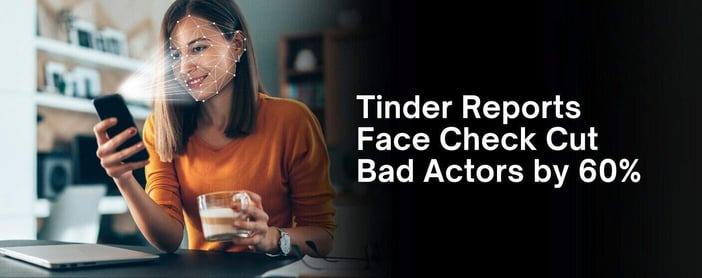
- Tinder’s new ID verification tool, Face Check, has shown “measurable impact” by decreasing exposure to bad actors by 60%, according to Yoel Roth.
- Face Check is part of Tinder’s $45 million reinvestment into safety, which aims to strengthen trust between Tinder users and the app itself.
- Like Tea, Face Check uses selfie videos for ID verification, highlighting the importance of strong ID protections following Tea’s massive data leak in 2025.
Tinder users in California are no longer the only U.S.-based daters with access to the app’s new identity verification feature, Face Check. The app plans on making the safety feature available to users throughout the U.S.
Face Check, which is powered by the AI-enhanced software FaceTec, matches video selfies to a new user’s profile photos to officially confirm their identity. By using a video selfie instead of a regular photo, Face Check can better map the user’s facial features and more accurately detect signs of AI or spoofing.
Once Face Check verifies the user’s identity, a Photo Verified badge will appear on their profile, signalling to potential matches that the person behind the account is, indeed, a human being, and not a bot.
As the first major U.S.-based dating app to implement mandatory facial liveness verification, Tinder’s Face Check lives up to its self-imposed title as the “first-of-its-kind facial verification feature,” though it first launched in Canada, India, Australia, and Colombia before being introduced to California consumers.
Face Check’s extended roll-out process is part of Tinder’s ongoing efforts to “[strengthen] and [accelerate] our investments in Trust and Safety,” according to CEO Spencer Rascoff.
Face Check Reduces Risk of Bad Actors by 60%
With Face Check, Tinder joins other major dating apps in making safety an industrywide priority. Modern dating apps are shouldering the responsibility of providing safety, instead of leaving safety up to the user’s discretion.
Nowadays, online daters don’t only want innovative trust and safety strategies from their dating apps — they expect them.
And implementing facial liveness verification hasn’t only made Tinder users feel safer — users reported “meaningful improvements” when it comes to trust — but has actually made the app a safer place to forge real connections.
Case in point: Match Group’s Head of Trust & Safety, Yoel Roth, called Face Check “perhaps the most measurably impactful Trust and Safety feature I’ve seen in my 15-year career.”
These key words — “measurably impactful” — put the user’s desire for effective safety innovations into sharp relief.
The stats speak for themselves: Tinder notes a 60% decrease in exposure to potential bad actors, and a 40% decrease in user reports of bad actors.
Face Check is Part of Tinder’s Recommitment to Safety
When modern daters invest in a dating app subscription, they don’t want to receive empty promises of safety. They expect their apps to follow through — with worthwhile love connections, and with innovative safety features.
To this end, Face Check also adds “meaningful obstacles that are difficult for bad actors to circumvent,” Roth said, such as being able to detect duplicate profile pics.
Rascoff, who also leads Tinder’s parent company Match Group, explained how innovating for safety can improve the relationship between the app and its users.
“Safety is an essential part of the Tinder experience, built into how people join, match, and connect,” he said. “Face Check reflects our deepening commitment to responsible innovation that builds trust and supports a healthy, growing community.”
Tinder’s “deepening commitment” to safety gained momentum in May, when Rascoff led a widespread refurbishment of Tinder, reinvesting $45 million into the type of innovation and safety features Gen Z daters crave — including tech like Face Check and its new Double Date feature.
Roth emphasized how Face Check’s biggest achievement is providing safety during the onboarding process without making users feel like they’re stranded in airport security. “[Face Check] helps tackle one of the hardest problems online, knowing whether someone is real, in a way that feels seamless and effective for real users,” Roth said.
But no app is foolproof — even those designed with safety in mind.
Tea’s Leak Underscores Need for Strong ID Protections
Tea, the dating safety app that was formerly ranked the No. 1 Lifestyle app in the U.S. by the App Store, made headlines this year when it suffered a massive data leak, exposing selfies used for identity verification purposes.
Tea had previously promised that selfies were deleted promptly after being used. The incident highlighted how the safety measures dating apps promise aren’t always the same as what they deliver — and aimed a skeptical eye on apps that make similar claims, like Tinder.
In October, Apple removed Tea from the App Store, specifically citing content moderation and user privacy concerns.
With the Tea incident still fresh, Tinder has assured users that their own selfie videos are deleted after review, and that their facial recognition data is stored with a “non-reversible, encrypted face map.”
Face Check’s “measurable impact,” including the 60% decrease of exposure to bad actors, puts Tinder in a more favorable position. As Face Check becomes available throughout the U.S., Rascoff confirmed that the feature won’t be exclusive to Tinder for much longer.
Given how Roth referred to Face Check as “a new benchmark for trust and safety across the dating industry,” it’s no surprise that Rascoff plans on implementing Face Check in other Match Group properties — perhaps even Hinge and OkCupid.