Key Takeaways
- Tinder’s new voice reflects a broader industry shift: dating apps must build trust and emotional connection to win over modern daters.
- Legacy dating apps must evolve for new audiences without losing the brand identity that made them recognizable in the first place.
- Gen Z Tinder users want the efficiency of apps without feeling controlled by them.
- For dating apps trying to win Gen Z, authenticity starts with the people building the product.
If Tinder could’ve talked back in 2012, it would’ve said something that made modern users’ eyebrows rise into the stratosphere — “DTF only,” perhaps. It was high-pressure, strictly casual, a little wild. Today’s Tinder, though, doesn’t only want to sound different. It wants users to believe it’s different.
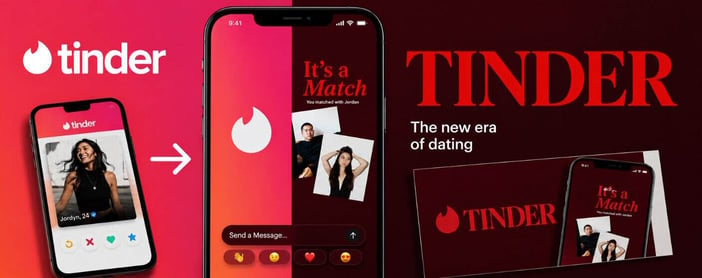
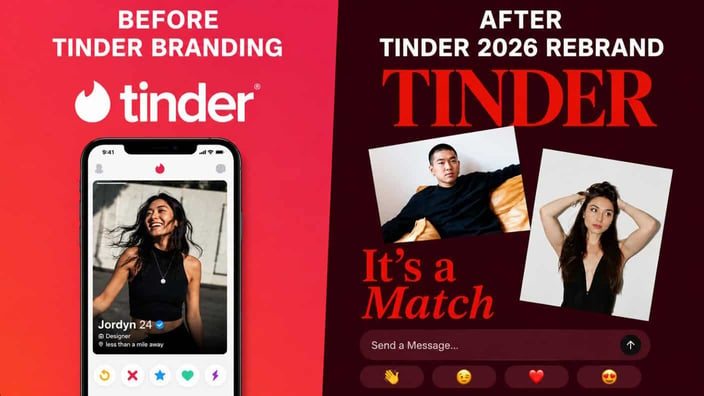
The Wild West of dating has officially entered into a gentler era. I’m not just talking about Tinder’s new(ish) features, like Double Date, IRL Events, and Astrology Mode. The app’s look, voice, and vibe have all been updated to reflect Gen Z’s more introspective and safety-conscious dating needs.
The industry’s biggest and oldest apps have adjusted (or not adjusted) to rapidly changing dating needs; Bumble, for one, has famously struggled to maintain a foothold, while Hinge’s laid back, user-friendly, relationship-oriented approach has worked wonders on younger daters.
Tinder, meanwhile, has had a uniquely challenging run. As the generation raised on screens takes over the dating world, Tinder is attempting to adapt. It isn’t trying to convince Gen Z to date like millennials, but to trust that Tinder has grown up alongside them — that the app is just as valuable as it was in 2012.
Tinder’s New Voice Evokes Carrie Bradshaw For a Reason
Tinder’s makeover isn’t only skin-deep. “We really wanted to make the voice a huge part of the identity,” Natalee Ranii-Dropcho, strategy and copy director of Porto Rocha, the design team behind Tinder’s rebrand, told It’s Nice That.
In updating for a new generation of daters, legacy apps have to ask themselves who they’re really for — and who they want engaging with the app the most. With women demanding more freedom and more safety on the apps, it’s only natural that Tinder has transformed its voice to meet this need.
The goal? For Tinder’s voice to sound less like the millennial-coded frat boy we remember and more like an open-minded, self-confident, and unabashedly earnest dating columnist, a la Carrie Bradshaw.
“We really wanted to make the voice a huge part of the identity.” -Natalee Ranii-Dropcho
Using a Carrie-like voice is not just a fun pop culture reference. Legacy apps like Tinder have to contend with the same unassailable truth: They were designed for a now antiquated era of dating, one where women were expected to take the brunt of ghosting, unsolicited nudes, and online harassment.
A Carrie-inspired voice signals curiosity and candidness rather than bravado. This is why Tinder’s voice is so important: The more trusted the voice, the more trusted the app. And trust could very well be a platform’s most valuable commodity to modern daters.
I mean, just look at Tinder’s new design, imagery, and features. Astrology Mode leans into aesthetics that resonate with many younger women, signaling a softer, more personality-driven version of Tinder. Another distinctly female-coded addition? How the safety section highlights the user’s agency: “Connect confidently. Chat respectfully. Stay in control.”
How Can You Update an App Without Losing its Strengths?
According to Porto Rocha’s senior designer, Yedo Han, the creative team had to ask themselves a serious question while updating Tinder’s UI: “How do you approach making the identity feel surprising to a new generation, while still feeling like itself?”
After all, when a company updates its design, its biggest challenge is retaining its brand recognition while changing its overall identity. As Han put it, Tinder is trying to inject “daringness” and “wittiness” while maintaining “warmth” and “approachability.”
In other words, Tinder wants to appear more approachable for more groups. We’ve seen this expansion in other apps recently, from Bumble walking back its defining women-first design to Hinge’s growing plethora of diverse, thought-provoking prompts.
There’s value in crafting a voice that some people trust and others are merely curious about, the Porto Rocha team said. “Everybody has their own opinion, so if they hear something they disagree with, that’s a chance for them to get into the conversation,” Han said.
Gen Z Embraces Both Online and Offline Love
In Tinder’s case, the decision to rebrand was one of necessity. CMO Melissa Hobley explained that these changes are “new ways to connect that meet this generation where they are.” More specifically, young singles are all about finding offline love, while still welcoming the efficiencies of an online platform.
In fact, in her conversation with It’s Nice That, Ranii-Dropcho brought up one vital point: How even though Gen Z is burnt-out on online dating, they still have hope that dating apps will work in their favor.
It’s only natural for legacy apps to play on this enduring hope. Tinder aims to do this by, as Ranii-Dropcho put it, “[making] space for contradiction within the brand.” Instead of encouraging young singles to embrace Tinder’s millennial-coded design, it’s changing itself to meet their specific needs. And the most important of these needs is the need for choice.
Back in the day, Tinder boiled “choice” down to “left swipe, right swipe.” Today’s version of the app treats choice as something much broader.
Back in the day, Tinder boiled “choice” down to “left swipe, right swipe.” Today’s version of the app treats choice as something much broader. Modern users can choose how they date, what kind of relationships they’re looking for, and even whether they’re ready for one at all.
I’m reminded of Tinder’s 2018 “Single, Not Sorry” campaign, which promoted Tinder as an app for casual, fun-loving singles. Its voice is not only more open-minded nowadays, but more relaxed: “Whatever you’re looking for, or not looking for yet, Tinder gives you the space to figure it out,” the app says on its updated site.
This relaxed tone is one younger daters look for from dating platforms. They don’t want to be rushed through the matchmaking process, and will initially look to a platform’s design and graphics to figure out if the app is right for them.
If You’re Designing for Gen Z, Hire Gen Z
It’s important to note that Tinder has young creatives like Han contributing to the overall design, ensuring that it resonates with younger daters. Other big names in the industry have emphasized the importance of having young, knowledgeable voices behind the scenes.
Gender & Sexuality expert Edward Reese, who recently spoke to DatingNews about Taimi’s nonbinary representation, said “the whole team behind the app must be educated about LGBTQ+ identities” in order to truly resonate. The same goes for dating apps that want to entice today’s daters: The people best suited to appeal to Gen Z are Gen Z.
It’s possible that Tinder and any legacy dating app’s biggest hurdle is its own reputation. How can you convince people that Tinder isn’t just making a few cosmetic changes, but genuinely changing the way it approaches dating?
If this rebrand teaches us anything, it’s that Tinder is no longer content being solely “the app that started swipes.”
For Tinder, convincing younger daters of its new mission starts with changing the UI. But beyond new imagery and a fresh perspective is Tinder’s new overall vibe. This is a version of Tinder that treats its user base like grown-ups — young, open-minded, and earnest grown-ups, but grown-ups all the same.
Whether Tinder’s vibe shift will actually lead to a turn-around remains to be seen. We’re in an age where dating apps, regardless of redesigns, may be turn-offs for young daters solely because they’re dating apps.
If this rebrand teaches us anything, it’s that Tinder is no longer content being solely “the app that started swipes.” It wants to become something more nuanced, more introspective — or, at least, it wants us to believe it has.