Key Takeaways
- With user growth slowing in Q1, Bumble is turning to celebrity-powered content to build relevance with younger daters beyond the app itself.
- As traditional growth strategies, like swipes and premium features, lose momentum, Bumble is investing in brand affinity and off-app engagement.
- Bumble is using trusted creator personalities like Jake Shane to build the authenticity and relatability that younger daters expect from brands.
- In response to subscription fatigue and declining engagement, Bumble is investing in culture-building as a long-term growth strategy.
As Bumble struggles to survive, it’s finding hope in a stabilizing force: star power. And it’s evolving beyond in-app engagement to do it.
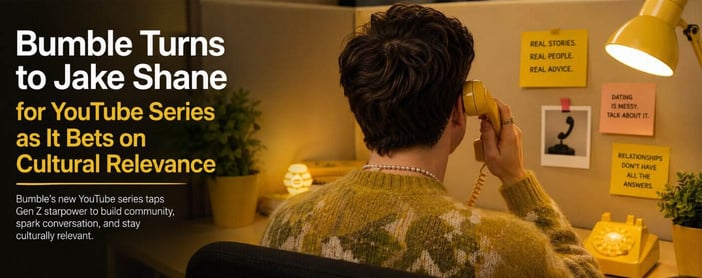
TikTok star-turned-media personality Jake Shane is the first guest in Bumble’s new YouTube series, “Bee Line,” which has celebrities giving relationship advice to callers from inside a charming yellow office cubicle.
Bumble describes the series as a social-first YouTube show that allows real people to share their unfiltered experiences.
“Real” and “unfiltered.” The only word missing from this lineup of buzzwords is “authenticity,” but that’s exactly what Bumble is going for with “Bee Line.” How can a legacy brand reignite interest in a date-fatigued demographic? By enlisting the help of internet-famous celebrities who embrace the messiness of modern dating, of course.
This reminds me of Bumble’s newest feature, Plans, which encourages daters to use the app only after they meet IRL. The real question is, can a YouTube show, of all things, really draw in the new subscribers that Bumble needs to stay afloat?
“Bee Line” is Bumble’s Attempt at Off-App Engagement
By taking user engagement off the dating app itself and putting it into YouTube and social media, Bumble is sending a clear message to users: The future of dating platforms may depend on building communities, not just making matches or gaining subscribers.
It’s hard to imagine a world where swipes or subscriptions are not major growth factors on dating apps. And although this world is still a ways away from being reality, “Bee Line” signals Bumble’s plans to build cultural relevancy off the app, no swipes (and maybe even no subscriptions) required.
This may sound like a drastic move, but consider Bumble’s position: Although total Q1 revenue decreased 14% YoY and total paying users decreased 21.1%, the total average revenue per paying user increased 8.9%. Bumble is earning more from the users who remain, even as its overall user base contracts.
Percentage drop in total paying users in Q1 YoY
Source: Bumble
User loyalty, it seems, is valuable, and not only to Bumble, but to the users themselves. As premium features and the "subscribe" button lose their allure, dating apps will have to question what it means to be valuable to users.
And I think this question has a straightforward answer. What young daters really want is a vibe — a curated community of daters with similar values and interests. Bumble, Tinder, and Hinge have all invested in IRL matchmaking and social events in an effort to bring their own specific “vibes” to life.
With "Bee Line," Bumble’s goal is not simply to increase app usage, but to strengthen user connection to the Bumble brand.
So the decision to feature the starpower of Gen Z-specific personalities like Jake Shane is a shrewd move on Bumble’s part, one that signals Bumble’s intent to make its app a popular meeting place for young singles, strengthening its value in the process.
With "Bee Line," Bumble’s goal is not simply to increase app usage, but to strengthen user connection to the Bumble brand. And the more connected users feel to Bumble’s brand, the more likely they are to pay for it.
Why Jake Shane? Because Users Crave Gen Z’s Authenticity
Jake Shane is both the epitome of relatability and the blueprint of what can happen when your TikTok goes viral: skyrocketing fame, instant headlines, massive clickability. And for Bumble, he just might be a cross-promotional goldmine.
“New episodes will continue across YouTube, TikTok, and Instagram, connecting us with Gen Z and Millennial daters through the voices they know and trust,” according to Bumble.
As a popular podcaster and Gen Z figurehead, Shane certainly qualifies as one of these trusted voices. In the first episode of "Bee Line," Shane rattles off a series of TikTok buzzwords in a matter of seconds: “The greenest of green flags.” “Don’t be a narcissist.” “I wouldn’t yuck his yum.”
This may not resonate with every viewer, but it hits exactly where Bumble wants it to — the Gen Z and millennial daters of the world. And it helps that Shane is warm, relatable, and vulnerable with callers.
Bumble hoped to build off of this authenticity with phone booth activations in LA and NYC on June 12. The idea was for Gen Z and millennial daters to stop by the pop-up and ask a dating-related question for a future host of "Bee Line." Ideally, the pop-ups allowed for the “real” and “unfiltered” user content Gen Z craves.
More importantly, the activation transformed "Bee Line" from a fun, but relatively ordinary, YouTube video into a valuable participatory experience.
For Bumble, Cultural Relevance Begins With Celebrity Guests
Nowadays, the definition of “success” is no longer only about in-app clicks, but a strong and sustained social media presence. It’s like I said in my article about the Plans feature: Bumble is intent on becoming a lifestyle brand with real emotional roots, not just swipe-enabled matchmaking.
No word yet on who’ll be sitting in the bright yellow "Bee Line" cubicle next, but rest assured, they’ll have Gen Z-coded wisdom to share. I’m calling it now: future guests will run the gamut of lifestyle influencers to celebrity interviewers, perhaps perennially authentic, Gen Z-adjacent TikTok figures like Tefi Pessoa, Brittany Broski, or Drew Afualo.
Bumble is intent on becoming a lifestyle brand with real emotional roots, not just swipe-enabled matchmaking.
After all, if Bumble wants to get one step closer to establishing its own unique vibe, it never hurts to enlist the help of a few friendly — and internet famous — faces.
But at the end of the day, whether "Bee Line" succeeds or fails may matter less than what it represents. Bumble is increasingly behaving like a media company, investing in creators, content, and community-building efforts that exist beyond the swipe.
For an industry grappling with subscription fatigue and declining engagement, Bumble’s decision to invest in culture-building over straightforward engagement tools may be the most important signal of all.


![Match vs Zoosk: Expert Review & Pricing[updated_month_year before=" (" after=")"]](https://www.datingnews.com/images/uploads/2023/09/match-vs.-zoosk-feature.jpg?width=342&height=135 "Match vs Zoosk: Expert Review & Pricing[updated_month_year before=\" (\" after=\")\"]")