Key Takeaways
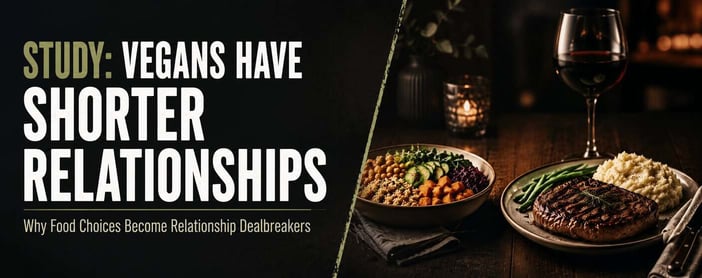
- A five-year analysis from Hanker Dating suggests vegans and vegetarians may experience shorter relationships than meat-eaters.
- Hanker defines “success” by how long daters stay off the platform before returning, a metric it admits is imperfect but still reveals how shared interests shape compatibility.
- Veganism is a social identity rather than just a diet, meaning vegan daters may simply need partners who understand and respect the lifestyle’s cultural and moral values.
- Giving up meat may shrink one's dating pool, but that constraint may also help vegans find more compatible, longer-lasting relationships.
- Niche vegan dating apps reflect a broader shift toward hyper-specific matchmaking, where shared moral and lifestyle alignment reduces friction, narrows dealbreakers, and can improve long-term compatibility.
The invite-only matchmaking platform Hanker Dating analyzed more than 120,000 member relationships over five years and found that vegans may, on average, have shorter relationships than meat-eaters.
Surveyed Hanker members who identified themselves as meat-eaters returned to Hanker after 26.3 months, while vegans and vegetarians sought Hanker’s matchmaking skills again after 18.7 months. The implication is clear: On average, meat-eaters are in relationships for 40% longer than non-meat eaters.
This finding isn’t a fluke, Hanker emphasized. “The finding held across every geographic region we tested and remained significant at p < 0.001 after controlling for age, gender, income, and country,” the matchmaking platform claimed. “This was the largest effect size of any variable we tested.”
What is Hanker’s Definition of a “Successful” Relationship?
Hanker’s findings are enlightening, but they also hinge on the platform’s specific definition of success: “Our proxy for relationship success is this: the longer it takes a member to return to Hanker, the longer and presumably happier their previous relationship was.”
Hanker acknowledges that “this is an imperfect and somewhat arbitrary measure.”
Hanker also acknowledges that its analysis has not been peer-reviewed, but asserts that its findings are still statistically significant.
I can’t deny these potential biases, but I also think these stats are fascinating. From a dating perspective, these findings highlight just how valuable shared interests are, and how certain interests have the potential to become major compatibility signals for dating apps and matchmakers.
Are Vegans Harder to Date?
So, why do meat-eaters appear to have longer relationships than non-meat eaters? Spoiler alert: It’s not because we tend to associate vegans with the grass-eating off-gridders who protest outside of Burger King.
Of course, this depiction of veganism is mired in stereotypes and light years from reality, with all vegans and vegetarians bringing different perspectives and life experiences to their decision to not eat meat and other animal products.
“Vegetarianism is not just a diet — it is an important part of an individual’s social identity.” -Hal Herzog, Ph.D.
It’s not necessarily what we eat that affects our dating lives, but the cultures surrounding what we eat. We expect people to eat meat; when they don’t, they become “othered”, and this othering results in a separate culture, with its own trends and norms and moral codes.
“Vegetarianism is not just a diet — it is an important part of an individual’s social identity,” said Hal Herzog, Ph.D., of vegan and vegetarian culture in Psychology Today. So it’s not necessarily that vegans are harder to date, but that they sometimes require a partner who respects their niche cultural needs.
What are the Pros and Cons of Dating as a Vegan?
A 2020 study published in the Journal of Social Psychology found that the research participants who did not eat meat were 12 times more likely than omnivores to have partners who also do not eat meat. Reflecting on this study, Herzog said “giving up meat can shrink your dating pool considerably.”
In other words, the dating world is built for meat-eaters, but vegans have to alter the dating world to fit their own needs, narrowing their chances of finding long-term, like-minded connections as a result.
“Vegetarianism definitely interferes with my social life,” one woman told Herzog. “I won’t go out with anyone who is not a vegetarian.” But she also confirmed that this downside has an upside: it clears the path for partners who share her values.
“Early on, most of the men I dated were not vegetarian. I will never do that again,” she said. “Having that kind of moral blockade between someone you are involved with is just impossible.”
In truth, Hanker’s findings actually reveal a major upside for vegan daters: If social friction accounts for shorter relationship duration, then dating a fellow vegan could be a clear sign of hope for a longer, more satisfying relationship.
Are There Niche Dating Platforms for Vegans?
You can identify yourself as a vegan on pretty much any dating app. But it’s safe to say that niche apps like Veggly and Grazer, which specifically cater to vegans and vegetarians, help vegans date with less friction and more accuracy.
For vegans, the lifestyle isn’t only about diet, but about morality. By dating a fellow vegan, questions about restaurants, household habits, ethics, social circles, and even long-term family values become less of a compatibility hurdle.
In that sense, vegan dating isn’t necessarily about excluding meat-eaters; it’s about reducing friction before it has the chance to build.
Whether it’s religion, politics, fitness, sobriety, or diet, people increasingly want partners who already understand their basic needs and boundaries.
I’ve written about the pros of niche dating platforms ad nauseum, but the truth remains: Hyper-specific matchmaking communities have a better chance at personalizing matches, making them more accurate as a result.
Whether it’s religion, politics, fitness, sobriety, or diet, people increasingly want partners who already understand their basic needs and boundaries. Compatibility today is less about opposites attracting and more about lifestyles aligning. It’s no wonder some vegans date within their own communities.
When a lifestyle choice is tied to personal morality, it can quickly become a relationship dealbreaker. While that may lead to more breakups — and shorter, “failed” relationships, by Hanker’s standards — it could also help vegans find more compatible, longer-lasting relationships in the long run.