Key Takeaways
- Nearly 4 in 10 surveyed Americans have avoided dating someone because they dated someone they know.
- 44% of respondents say their dating pool overlaps with their friends’ dating pool at least sometimes.
- Women were more likely to be bothered by a friend dating their ex (65%) and more likely to avoid dating someone from their friend’s past (43%) than men.
Is it okay to date your friend’s ex? It’s an age-old debate that often sparks passionate reactions and sometimes controversial responses. But it remains a relevant question all the same today.
While some people may invoke girl- or bro-code in this conversation, others see dating a friend’s ex as a non-issue or probably have already done it, showing just how common a dilemma it is. But where do Americans truly fall in this debate?
According to a recent DatingNews survey, 58% of U.S. adults say they would be bothered by a friend dating their ex, showing that ex-related boundaries still carry emotional weight for many people. Yet 42% say they wouldn’t take issue with it, revealing an apparent disconnect.
Opposition was most apparent among female respondents, with 65% of women saying they would be bothered compared to 50% of men. Gen Z also showed intense disapproval, with 63% condemning the idea compared to just 39% of boomers — the least bothered group.
Dating a friend’s ex is still a highly debated topic. And it’s clear, depending on outlook, approval is more acceptable for some than others.
38% Have Avoided Dating Someone Because They Previously Dated Someone They Know
How people frame dating a friend’s ex doesn’t just influence their opinion; it also shapes their dating behavior.
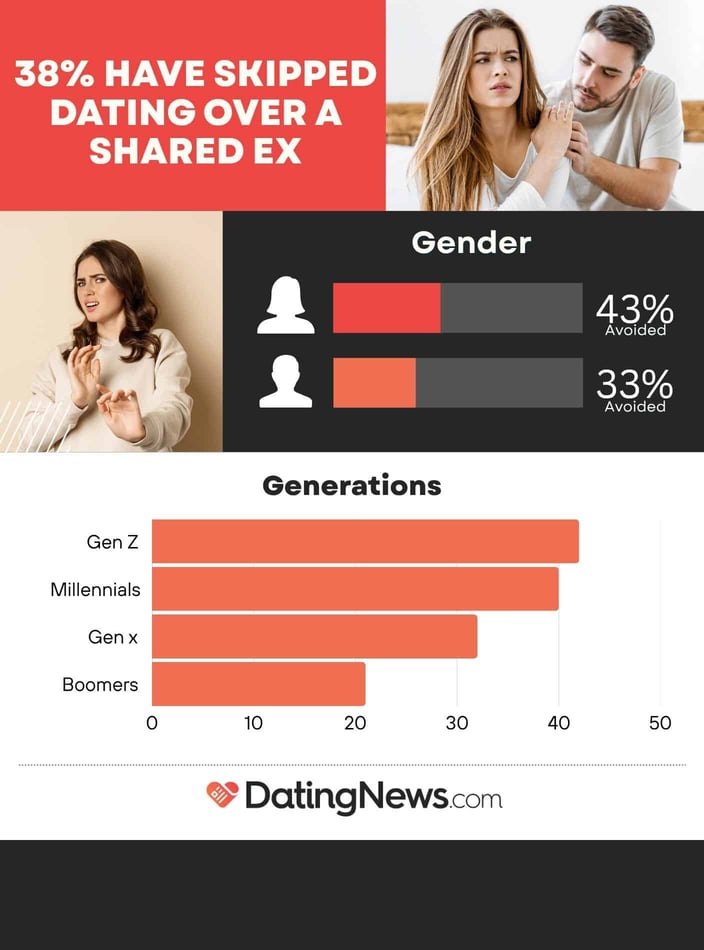
When asked whether they avoided dating someone because of shared romantic history with someone they knew, this is how our respondents answered:
- 38% avoided dating the person
- 55% didn’t avoid dating the person
- 7% considered avoiding them but did it anyway
We found clear splits in behavior, revealing varying stances on dating and social boundaries regarding friendships.
Women (43%) and Gen Z (42%) were the most likely to avoid dating someone who was previously involved with someone in their circle, backing up their disapproval with real action.
On the other hand, men and baby boomers showed the least hesitation, with 61% of men and 75% of boomers saying they have not avoided dating someone from their friend’s past. This reveals a significant gap in how people make dating decisions based on shared romantic history.
The implications for dating a friend’s ex may vary across demographics, possibly pointing to a difference in social influences within these groups.
44% Say Their Dating Pool Overlaps With Friends’ Dating Pools at Least Sometimes
But how does one end up dating a friend’s ex in the first place? One reason could have to do with accessibility.
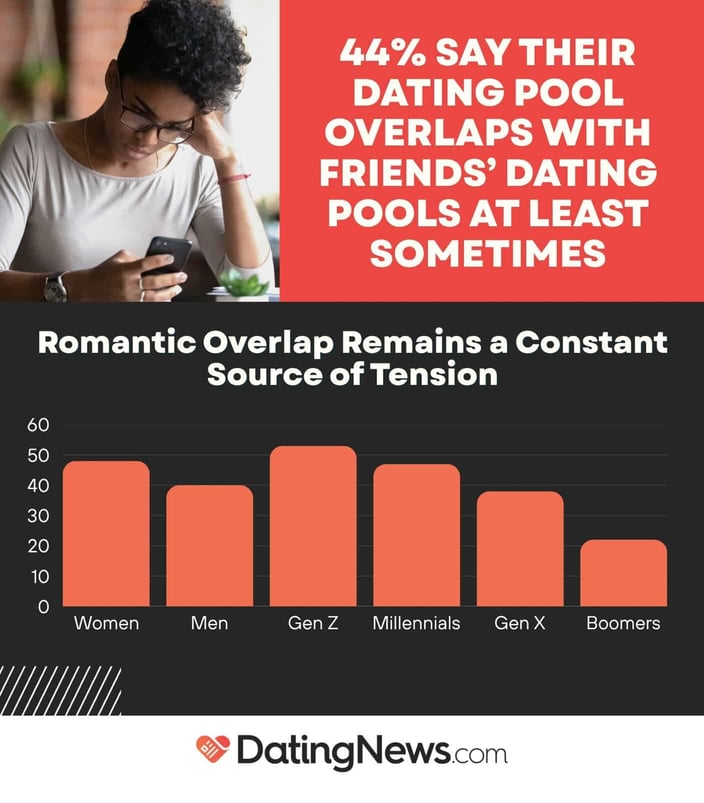
According to our study, 44% of people say that their dating pool overlaps with their friends’ dating pools at least sometimes, revealing a possible source of tension in this debate.
While respondents were split on the ethics of dating a friend’s ex, many daters still see overlap in their romantic interests, pushing them into this dilemma regardless.
In fact, about 11% of respondents say this overlap happens very often within their friend group, leaving them to make the frequent decision about whether to avoid a friend’s ex.
To Date or Not to Date
It’s clear that whether someone should date a friend’s ex is still a hot debate within the American dating landscape.
We see daters fall on either side of the line in their opinion, with some demographics showing more support than others. But this isn’t only a matter of opinions. It’s actually impacting real-life dating decisions.
More than a third of respondents said they avoided dating someone because they had dated someone they knew. Yet 44% report at least occasional overlap in their dating pools, pointing to the real impact this social concept has on people’s romantic decisions.
Whether people choose to date a friend’s ex or not, there is no question that social boundaries still play a significant role in how daters pursue love in modern dating.
Methodology
This survey was conducted by DatingAdvice and Prodege and includes responses from 1,498 U.S. adults ages 18 to 79 across a range of relationship statuses, including single, in a relationship, and married.
The sample reflects a broad distribution across gender, age, and U.S. regions. Fieldwork was completed in March 2026. The theoretical margin of error for a probability sample of this size is ±2.5 percentage points at the 95% confidence level.
For media inquiries, please contact colleen@datingnews.com