




Key Takeaways
- Dating professionals, including therapists, can help today’s daters learn how to respect emotional boundaries and avoid toxic oversharing, like floodlighting.
- Apps with time-sensitive messaging and AI-enabled chats can cut floodlighting off at the beginning of a first date or conversation.
- Dating professionals can cut down on floodlighting by teaching daters how to differentiate between authentic vulnerability and manipulative floodlighting.
A viral new term for the intense oversharing that so many daters experience on first dates is emerging: floodlighting.
Is it inappropriate to talk about one’s childhood trauma on a first date? What about that wild story about the ex-girlfriend and the ex-best friend she cheated with? In an increasingly online world, distinguishing between genuine vulnerability and emotional manipulation is hard.
Some believe that floodlighting is a manipulative way to fast-track intimacy, while others think it’s a sign of an emotionally unregulated generation of daters.
Around 40% of American survey respondents told matchmaking company Tawkify that they’ve experienced floodlighting for themselves sometime in the past year. More than half of respondents said floodlighting even made them rethink their relationship.
Clearly, dating professionals and even dating apps need to address floodlighting and its potentially toxic affect on relationships.
52% of Floodlighters Need Therapy, Say Respondents
Dating coaches, therapists, and content creators alike all have a duty to educate their clients about emotional boundaries.
We live in a world where people share the minutiae of their daily lives on Facebook, showcase their relationship with friends and family on Instagram, and their deepest romantic desires on dating apps. Many daters are accustomed to sharing their private lives with strangers on the internet, but face to face?
On a first date, some people keep their feelings bottled up, and others can’t help but trauma dump before the entrées have even arrived. It’s safe to say that many modern daters need some help regulating their emotions, not to mention learning how to express and respect emotional boundaries.
Daters are increasingly sensitive — and skittish — when their emotional boundaries are crossed. Thirty-five percent of daters admitted to ghosting someone who overshared too early.
Still, not every floodlighter intends to make their date uncomfortable.
The loneliness epidemic, which has been discussed ad nauseum by dating professionals and apps alike, is still wreaking havoc among modern daters, particularly young men. A whopping 69% of surveyed respondents said loneliness and feeling a need to talk to someone compelled them to overshare.
Then there’s the 49% of respondents who took the whole “honesty” thing too far because they thought it would make them more attractive. Thirty-two percent said they overshared because they wanted their date “to feel close to me,” not realizing that their intensity actually pushed their date further away.
What do all of these floodlighting explanations have in common? According to 52% of survey respondents, these people floodlight because they’ve never been to therapy.
With this in mind, dating professionals and therapists have the opportunity to address floodlighting at the source.
Apps Can Be A Floodlight-Free Zone
“Awareness is key to helping people pace emotional intimacy more intentionally,” licensed marriage and family therapist Kimberly Panganiban told DatingNews.
She added, “Matchmakers, coaches and dating app teams could help by providing information and opportunities that increase people’s awareness of their attachment styles, potential pitfalls within that style (for example, people that floodlight tend to have an anxious attachment style), and tips on how to prevent those pitfalls.”
Dating apps are bringing this advice to life by introducing features that help daters express their vulnerabilities in safe and respectful ways.
Hinge, for example, encourages mindful messaging with its various prompts and photos, rather than a generic swipe-up message. Other apps, like Once, have slow-chat features that limit a couple’s conversation speed, which can make floodlighting easier to spot.
Tinder’s “Are You Sure?” feature prompts users to think twice before sending a message that could be offensive or overwhelming to the other person. Some apps even have AI-enabled chats that keep conversations light and lively.
These features work best at the beginning of relationships, which is when floodlighting is most prevalent. For example, it’s most common for men to talk about their ex on a first date, according to Tawkify’s survey — 68% of men, to be exact, as compared to 55% of women.
Gender aside, 46% of respondents talked about a recent divorce or break-up, 45% talked about childhood trauma, and another 45% also revealed information about their mental and/or physical health.
Clearly, there’s a reason why niche platforms that cater to daters with more complicated backgrounds (such as for divorcees or people with mental illness) have been successful in recent months.
It goes back to Panganiban’s point about awareness: “When people are armed with self-awareness and knowledge, it sets them up for a greater chance of success at building a mutually satisfying, healthy relationship.”
When ghosting and even walking away from a relationship becomes a common reaction to a dating phenomenon, it’s in the best interest of dating app developers to address the root causes and find innovative solutions to the problem.
83% Agree: Oversharing Can Be Manipulative
Dating industry professionals and apps have the power to update the dating process to make distinguishing between genuine vulnerability and floodlighting easier for daters. After all, oversharing isn’t only a social faux pas; it can be a form of emotional manipulation.
In the worst cases, floodlighting creates a false sense of intimacy. The oversharer takes advantage of their date’s emotional vulnerability, enmeshing them with their trauma without their consent.
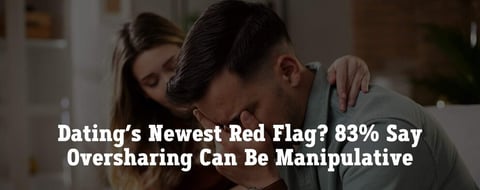
Thirty-three percent of those surveyed by Tawkify said that people floodlight for attention, and a not insignificant 14% said floodlighting is a manipulation tactic. And even though floodlighting isn’t always intentional, 83% of respondents agreed that it’s an effective way to manipulate someone’s emotions and gain emotional control in the relationship.
Tawkify survey respondents got real about their own floodlighting tendencies.
Thirty-eight percent of men compared to 26% of women in the survey revealed that their underlying motive for being vulnerable was to make the other person on the date feel closer to them.
An even larger percentage of men (45%) said they want to build a quick, but deep, connection and are willing to risk oversharing in the process; only 41% of women agree with this tactic.
Judging by Tawkify’s survey, it’s safe to say that a majority of today’s daters are tired of being emotionally manipulated or burdened by floodlighters: 66% believe in asking for emotional consent before sharing a traumatic experience with someone.
It’s up to dating professionals to teach them how to ask for emotional consent, and how to give it.

