




Key Takeaways
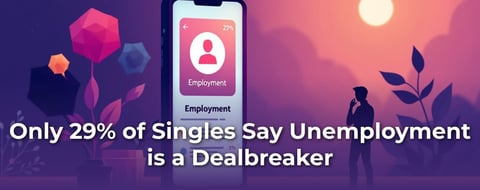
- While more than half of Tawkify’s survey respondents lament the emotional and financial effects of unemployment on their love lives, only 29% say it's a dealbreaker in a potential match.
- Unemployment is common, but dating platforms usually aren’t designed to help their users through it, and matchmakers are tailored to high-achieving professionals.
- Platforms that offer actionable advice, mental health resources, and communication tools have a better chance at retaining daters going through unemployment.
Tawkify recently surveyed over 1,000 adults to determine how unemployment affects their emotional state and their love lives. According to the survey, unemployment can change the way people interact with dating apps, potential dates, and even with themselves.
But the survey also managed to put to rest the age-old assumption that unemployment leads to heartbreak: Unemployment is only a dealbreaker to 29% of respondents.
In fact, people are more open-minded about a date’s unemployment status than one may assume. More than half of respondents (51%) said they’d still be open to a second date if their date tells them they’ve been recently laid off. Having a side hustle or passion project is even better, says 73% of respondents.
But when one’s self-worth is closely tied to their career, sudden unemployment can throw a wrench in everything from a person’s professional goals and finances to their love life.
Today’s unpredictable job market makes it essential for dating platforms and professionals to know how unemployed daters behave, what they feel, and what they need.
After all, 1 in 3 people still search for a serious relationship when they’re unemployed, putting dating platforms and dating professionals on the front lines for vulnerable daters.

The Sting of Unemployment Interrupts Romance
More than two-thirds (68%) of those surveyed said men face more unemployment stigma compared with just (5%) who said women do, though 20% say both genders share the stigma. One thing is sure: Unemployment can be a painful blow to one’s ego.
Fifty-one percent said they worry about being judged or rejected because they aren’t currently working, and 49% say unemployment has wounded their self-esteem. Their fears are not unfounded; 40% of unemployed men reported having fewer romantic prospects as compared to 24% of unemployed women.
Sixty-two percent of respondents told Tawkify that unemployment makes them feel less confident or desirable. Which explains why 39% of women and 36% of men in the survey said they become more emotionally closed-off after losing their jobs, putting them at a distinct disadvantage in the dating world.
Forty percent of unemployed men reported having fewer romantic prospects as compared with 24% of unemployed women.
It doesn’t help that, for obvious financial reasons, the job searching process tends to take precedence over dating. Thirty percent of respondents said they feel stressed and distracted by job hunting, and 35% won’t even consider dating again until they’re once again gainfully employed.
Then there are the logistical downsides of unemployment that easily lead to mental health struggles: Financial limitations on dates (65%), anxiety around disclosing one’s unemployment status (52%), and a loss of motivation to socialize or meet new people (42%).
Unemployment puts the modern dater’s mental and emotional health through the wringer. With too few resources to help them cope with the fallout, is it any wonder why they avoid the equally emotional dating process?
When Life Disrupts Dating, Platforms Often Fall Short
When describing their ideal client, most matchmaking services use some variation of the same key words: “professional,” “high-achieving,” and “ambitious,” all of which point to “gainfully employed.”
It doesn’t help that the mental and emotional health struggles brought on by the stresses of unemployment can stand in the way of the matchmaking process. With most boutique matchmakers looking for confident professionals with fully formed goals, unemployment can make successful matchmaking feel impossible.
Daters would naturally try out dating apps next, but these, too, present challenges for unemployed singles. Fifteen percent of men and 10% of women surveyed said they have swiped left on dating apps more frequently when unemployed out of fear of rejection.
In fact, 1 in 3 surveyed users delete dating apps from their phone as a result of unemployment. The unemployed may hesitate to even create a dating profile out of fear of being judged, pitied, or misunderstood.
With this in mind, dating professionals and platforms have an opportunity to provide open and judgment-free zones for daters who have every intention of finding a job.
Daters Stay Engaged When Platforms Offer Real Support
Dating platforms don’t have to cater solely to unemployed people to help them make real, actionable improvements to their confidence levels. For example, budget-friendly date ideas would be welcomed by the unemployed who still want to show their date a good time.
One’s employment status may not be an automatic dealbreaker for most daters, but it can give them pause. The benefit of uber-specific prompts like those found on Hinge is that they pave the way for serious conversations about important topics like unemployment and one’s professional ambitions.
This makes dating platforms a surprisingly fitting place to provide mental health resources. After all, dating platforms are where people deliberately set themselves up for criticism on just about everything: their looks, their interests, their accomplishments, and yes, their line of work — or lack thereof.
Specific prompts, like those on Hinge, pave the way for serious conversations about important topics like unemployment and one’s professional ambitions.
Daters may need a little help expressing themselves and their personal situations to new connections, and thoughtfully designed platforms can do just that.
“Passionate about STEM.” “Robotics nerd.” “WWII buff.” “Getting my Masters.” These are simple tags, but they all tell a more nuanced story than “This is where I work” about where a dater’s passions and career ambitions lie.
Platforms and professionals who encourage daters to be transparent about employment, and give them the tools to express their career goals, best meet the needs of this new generation of workers and daters.

