




Key Takeaways
- Dating apps that let users filter for serious, long-term goals are engaging an increasingly marriage-minded generation.
- Gen Z singles on BLK are rejecting casual hookups, using celibacy to protect their energy and seek only meaningful, committed connections.
- BLK’s focus on shared cultural values and intentional design gives Black singles a space to connect authentically.
When someone says they’re “on the apps,” we usually assume they’re “playing the field” — swiping left and right in search of hookups and casual flings. But this is no longer the case, according to BLK, the Match Group-owned dating app for Black singles.
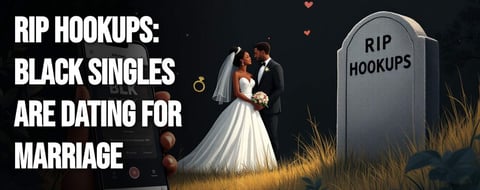
In fact, 75% of 5,000 surveyed BLK users said they are done with casual situationships and are instead seeking intentional, serious, and/or marriage-minded relationships.
I know what you’re thinking: What about swipe fatigue, the harbinger of dating app death we’ve been hearing so much about? BLK’s survey findings suggest that most daters aren’t so much fatigued by dating apps as they are by the hookup culture surrounding dating apps.
Forty-four percent of respondents said their biggest gripe with modern apps is dealing with unserious online daters.
After all, a majority of BLK respondents (44% to be exact) said their biggest gripe with modern apps is having to deal with daters who aren’t serious about their romantic futures. It’s like being on the same sports team as someone who doesn’t care about winning. Talk about a difference in priorities — and intentions.
This is why BLK describes itself as being “zero-tolerance for time-wasters.” It’s a direct response to the growing number of Black singles who find that the average dating app doesn’t meet their serious romantic needs. If other apps are stuck in the past, BLK intends to represent the future.
“People aren’t tired of dating apps; they’re just tired of unserious people,” Amber Cooper, Head of Brand at BLK, explained. “Black singles in America are officially over the ‘situationship’ era.”
Instead, a new era is dawning, one marked by intentionality, personalization, and long-term connection.
Singles Want Apps to Innovate With Intention
It’s clear that modern apps must innovate specifically for serious users, not only for new ones. To best meet the needs of this evolving generation of daters, apps like BLK are making it easier for users to filter for relationship types, and not just for personal qualities or lifestyles.
And when we say “filter,” we mean it literally and figuratively. “Black singles in the U.S. are being upfront about wanting long-term partnerships and are quick to filter out anyone who won’t state their end goals,” BLK told DatingNews. Daters are responding to apps that help them clarify their own needs in addition to someone else’s.
Just over 42% of BLK respondents said they check dating apps every day.
And real innovations won’t go unnoticed by most online daters: 42.2% of BLK respondents said they check dating apps every day and 32.8% check them every week, making dating platforms an ingrained part of people’s routines.
Swipe fatigue is real, but so is people’s need for connection. There’s a high potential for engagement. The real challenge is understanding what users are looking for and which innovations make them stick around.
Tinder thinks the answer is rooted in intention, hence the app’s host of new features that downplay its reputation for casual hookups. BLK’s Gen Z users seem to agree: 82% said they’re open to marriage, especially when it’s “built on a foundation of extreme intentionality.”
BLK’s Gen Z Users Are Leaving Hookups Behind
Another sign that Gen Z singles are done with hookups? A majority of Gen Z BLK respondents — 57.1% — said they’re not currently sexually active, and nearly 30% are fully celibate.
Once again, BLK responds to these findings by highlighting the importance of filters: “Temporary celibacy acts as a stringent filtration system to guard their peace until someone proves worthy of the investment,” BLK explains.
These daters are thinking about love with their heads, not only with their hearts. They’re not about to allow their passions run amok. As BLK put it, young daters are “rejecting the toxic pathways” that often lead to rushed matrimony and broken hearts.
These Gen Z singles are seeking control, and some are expressing it through their sex lives — or their lack thereof.
Slightly over 57% said they’re not currently sexually active, and nearly 30% are fully celibate.
“They are protecting their energy, setting real boundaries, and asking for true commitment,” Cooper emphasized. And BLK isn’t the first app to pick up on Gen Z’s tendency to guard themselves against emotional pain.
Fifty-five percent of Gen Z respondents to a Match Group survey said they aren’t currently ready for real love, and it isn’t necessarily because they want to sow their wild oats.
It comes from a deep-seated belief that they have to be better, do better, and achieve more before they will fully deserve a relationship. These daters don’t only want serious connections; they want reassurance from apps that the people they’re connecting with really are worthy of their time and emotional commitment.
BLK is a “Curated Sanctuary” — and Daters Approve
We recently reported how BLK users put “shared values” at the top of their relationship wish lists. This still rings true, according to BLK’s report (more than 27% said they want to share cultural values with their partner), and it points to the importance of authentic representation on dating apps.
What makes Tinder and Hinge special — their vast user base, for one — is also what makes them vulnerable. At times, these apps sacrifice personalization to provide options. Apps with niche demos, like Grindr, Feeld, and BLK, seem far more intentional in comparison.
“[Users are] coming to BLK because they want to skip the games and find someone who understands their culture.”
People are gravitating to BLK because it’s one of the few apps that is intentionally designed with the Black experience in mind. Users value what BLK calls “profound cultural shorthand,” or its ability to be a “curated sanctuary” where Black singles can avoid “the friction of cultural translation.”
In other words, BLK achieves something increasingly rare: It’s an accessible space that’s built solely upon the needs of Black singles. It doesn’t assume; it listens to its audience and attempts to innovate in kind.
“[Users are] coming to BLK because they want to skip the games and find someone who understands their culture and intentions right from the start,” Cooper explained. By doing this, BLK is allowing Black voices to shape the app’s culture — and it’s reaping the rewards.

